
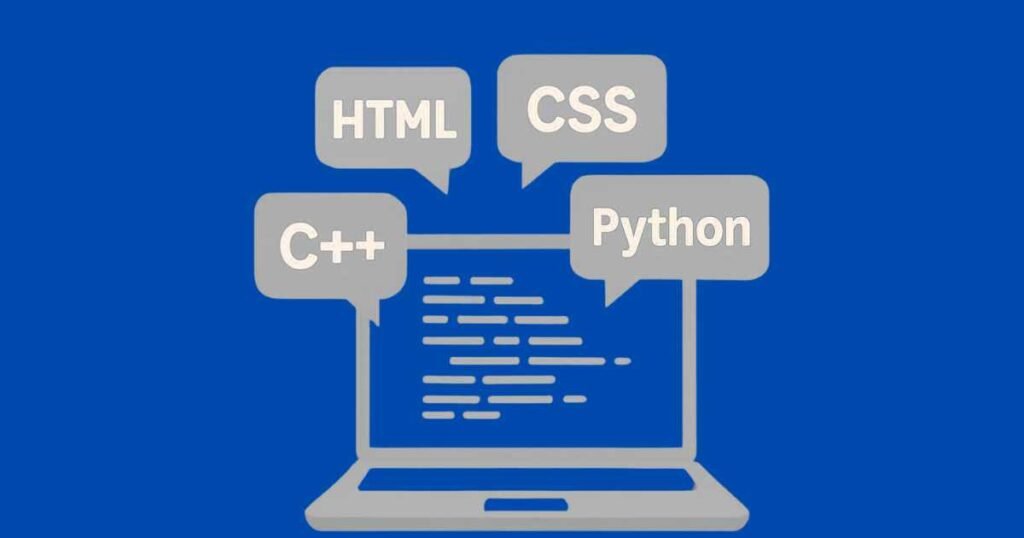
If you’re new to programming, pick Python.
Python is the fastest way to go from zero to useful code.
It’s simple to read, widely used, and opens doors across web, apps, data, and AI.
Below you’ll find a short, practical plan to choose a language and actually learn it.
Why Python is the best first language
Python is open source. Anyone can use it and contribute to it.
That has created a huge ecosystem of libraries and learning resources.
Python is extremely versatile. You can use it for web development, data work, automation, and AI.
Its syntax is clean. Most lines look like readable English. That reduces cognitive load for beginners.
Because of that simplicity and ecosystem, many learners reach a useful level in weeks rather than months.
If you compare typical learning curves, Python is much faster to become productive in than heavier languages like Java.
What matters when choosing a first language
Think about your goal. Do you want a job in data? Web apps? Mobile? Automation?
If your goal is not fixed, choose the most versatile option. Python fits that need.
Also check local demand. If recruiters around you want JavaScript for front-end work, learn the stack employers want.
But for a general, future-proof start, Python is the safest bet.
How a beginner should learn — the practical route
Start by doing, not reading.
Write small programs on day one.
Follow a short tutorial and type the code yourself.
Learn one concept, then implement it.
Example: variables → write a calculator; loops → process a list; functions → build a mini-tool.
Practice repeatedly. Theory helps, but practice teaches patterns and debugging.
Build tiny projects that interest you.
A daily task automator. A simple data report. A small web form.
Projects create purpose and keep motivation high.
Embrace errors.
Every error is a lesson. Read the message, search, and fix it.
The habit of debugging is what makes programmers good.
Measure your interest and aptitude honestly.
If running and fixing code gives you energy, continue.
If it feels like a chore with no curiosity, consider other tech roles (testing, product, or design) where coding isn’t central.
Daily learning checklist (for beginners)
20–30 minutes: follow a tutorial and type the code.
30–60 minutes: tweak the code or add a feature.
10–20 minutes: read a short note about a concept you used.
Weekly: finish one tiny project and share it (GitHub, forum, or with a friend).
How to keep momentum
Pair practice with small wins. Celebrate running your first script. Share it.
Join a study group or an online community. Ask questions. Teach a concept to someone else.
Use public problems (like small tasks on coding sites) to practice targeted skills.
Learn Python From Techolas Kochi
Python gives beginners the clearest, quickest path into programming.
But becoming a programmer is less about the first language and more about persistence.
You will get stuck. You will make mistakes. That’s normal.
If you keep practicing, debugging, and building, you will improve quickly.
Start small, stay curious, and let the joy of making things guide you.